
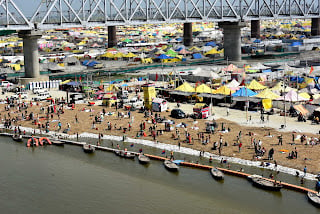
(pics by Shalini Maheshwari)
Prayagraj, which has been conferred with the title of tirthraj, assumes a greater significance during the month of Magh. The Puranas have enumerated the importance this pilgrimage destination enjoys in the month of Magh. According to the Matsya Purana, a mere visit to Prayajraj removes all sins, while the Kurma Purana mentions that those who reside here are not only able to attain salvation for themselves but also for their ancestors.
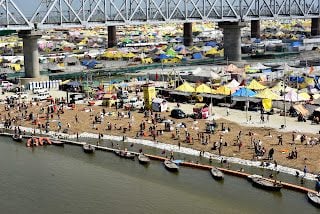
The sanctity of the place is the reason that even Gods and Goddesses feel blessed to reside in this land, which is also considered to be the utpatti sthal or genesis of the earth, according to the scriptures. It is believed that acts of benevolence done on this sacred land, taking the holy dip, removes one from the cycle of birth and death.
The Importance of Prayagraj during the Month of Magh
The importance of staying in the area magnifies during the month of Magh. The scriptures mention that if a person resides in the Sangam area during this period and follows a certain way of living, they are bestowed with the benefits at par with those of the Ashwamedha Yagya. The Puranas state that during the sacred month of Magh, it becomes the abode of all deities, gandharva, learned and holy men. Anyone taking a holy dip during this time reaps the benefit of all the tirths or sacred places.
The terminology kalpvas or the practice of living in the Sangam area during the month of Magh is not mentioned in the Puranas, but there are references to kalpvasis in Vishnu, Agni and Shiv Puranas with a different connotation.
The literal meaning of kalpa means 4.32 billion human years, which is akin to one year of Brahma. Kalpvas performed by householders may have their antecedent in the importance of the month of Magh, as mentioned in the Padma Purana.
Guidelines laid for the devotees to be observed during this period are quite similar to what the kalpvasis follow while their stay at the Sangam area. The core elements of kalpvas are restraint, nonviolence, and faith. A person observing kalpvas should make a commitment for taking holy dip at Prayag, control over sensory desires, and observe sanctity in thought and action.
Lifestyle Followed during Kalpavas
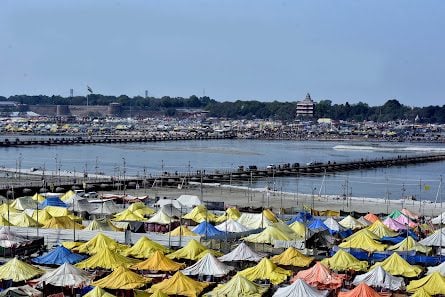
The duration of the kalpvas also varies, as some start from the eleventh day of the Hindu month of Paush to the twelfth day of the month of Magh. Some begin their stay from Makar Sankranti to Maghi Purnima, while some opt for shorter durations as well.
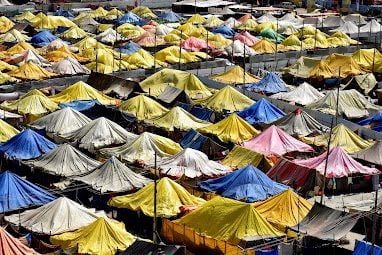
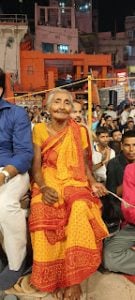
The kalpavasis, mainly householders, are not affiliated with any akharas; instead, they have their family pandas or genealogy priests and stay in the camps allocated to these priests. Often, the heads of the families stay as kalpvasis, but they are often joined by other family members who come and stay with them for a brief period. Some prefer to use the traditional method of cooking their meals, which include earthern furnace or chula, while others opt for the modern ways like cooking gas, etc., but what runs common is their lifestyle, which is mainly spartan. The straw or puaal is used as a bedding for them, and they have minimal facilities to survive during the kalpvas.
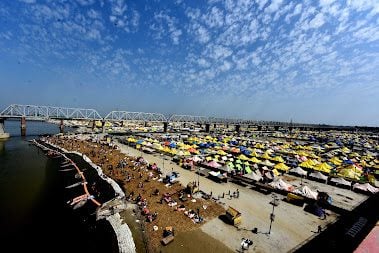
Those who are under a commitment of kalpvas should have a meal only once a day and control their desire. They should renounce things considered luxuries of life like perfumed objects, the use of sandalwood, oil massages, tobacco, lavish food, and refrain from any slanderous talk. They should also avoid communicating and getting in touch with a person involved in some misdeeds.
Padam Purana enumerates the daily life of the person to be observed during Magh. They should sleep on the ground, give up certain kinds of food, do hawan or make offerings to the sacred fire with ghee mixed with sesame seeds, pray to Lord Vishnu thrice a day, light an eternal lamp or akhand deepak in his reverence. According to the scriptures, Prayag is the favourite place of Lord Vishnu, so he should be worshipped, and a tulsi plant should be placed before the cottage of those residing in that area during Magh.
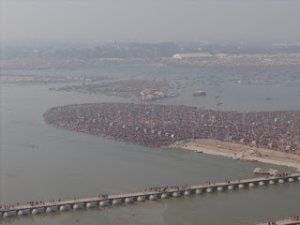
Taking the holy dip or Magh snan at Prayag should be the prime activity of the person. They should take the dip three times a day. Bathing in the holy river cleanses one from all sins and removes all obstacles of life. One is bestowed with long life, health and growth of the family. The person is granted a place in heaven in the next life.
A person taking the holy dip for three days during Magh gets the benefits similar to those of a person fasting for a hundred years. Though it is highly auspicious to bathe in the holy rivers during the entire month of Magh, the benefits of taking the holy dip on Makar Sankranti are beyond any calculation.
Matysa Purna also mentions that it is during this period river Ganga encompasses ten thousand tirth or pilgrimage places and three crore rivers within itself.
Importance of Fasting during Magh
The importance of fasting or upvas during Magh also finds mention in the Param Puran. Those who fast during the month, all their prayers, meditation, donation and rituals bear the fruits. The entire month of fasting should be initiated with the reverence of Lord Vishnu and with the approval of a guru.
The period of fasting begins from the eleventh day of the Hindu month of Paush to the twelfth day of the month of Magh. Even those who are not able do the fast for the entire month should perform the ritual on some special occasions or dates of religious importance falling within this pious month.
On the completion of one month of fasting, thirteen brahmans should be fed, given a donation of clothes and money to mark the conclusion of the fast.
The Act of Donation during Kalpvas
Giving a donation during the month of Magh is also held in high esteem. According to the Rig Ved any kind of donation releases a person from worldly miseries and moves him towards divinity.
The act of donation done during the month of Magh, at Prayag, holds great significance. After the conclusion of kalpvas donation should be made to Brahmins, which includes food, grain, clothes like yoga patta etc, blanket, ghee, saffron, footwear, cotton quilt etc, Padma Puran also mentions the benefits of donation of various things during this month, like sesame seeds.
Matsya Puran states that special importance has been given to gau-daan or donation of a cow, as it is believed to lead a person to heaven after his demise. The cow should be adorned with gold and silver.
Shayya Daan is also an important part of the donation. There is a tradition of shayya daan during the month of Magh. Devotees who have observed twelve kalpvaas organise this shayya daan or donation. This involves donation of bed and other articles used in daily life, like clothes, jewellery, furniture, footwear etc. It also marks the competition of kalpvas for those who perform this donation, as they don’t observe kalpavas once this is done.
The Ritual of Shradha during Kalpvas
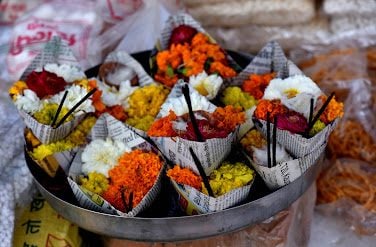
Performance of shradha or ritual in the memory of the ancestors is also part of the kalpvas. Matsya Puran states that the devotees, apart from invoking the deities during the month of Magh, should also perform rituals in honour of their ancestors. Even Padam Puran mentions that those who perform this ritual find a place in the abode of Lord Vishnu. It is not only the devotee but also their ancestors who find space in this revered place.
Parikrama of Sacred Spots
The entire exercise is incomplete without visiting or doing parikrama of sacred places. Though there is no mention in the Puranas of doing parikrama in Prayag, there is some reference regarding the darshan of local deities here.
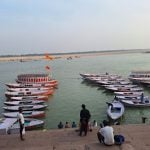
There are two kinds of parikrama done at Prayag, antarvedi and bahirvedi parikarama. The antarvedi parikrama begins from Sangam or the confluence of the river Ganga and river Yamuna, and the invisible River Saraswati. The journey begins with the holy dip at Sangam and puja near the Benimadhav temple. This is followed by the offering of a stream of honey, ghee in the River Yamuna, then moving to Niranjan tirth, Aditya tirth, Rindhmochan tirth, Paapmochan tirth, Parashuram tirth, Goghattan tirth, Pishachmochan tirth, Mankameshwar tirth, Kapil tirth, Indeshwar Shiv tirth, Taksham Kund, Takshkeshwar Shiv, Kaliyahrad, Chakra Tirth, Sindu Sagar Tirth. Taking the road route, one should visit Pandav Koop, Varun Koop, Kashyap tirth, Datweshwarnath Shiv, Surya Kund and rest at Bharadwaj Ashram. From Bharadeshwar , move to Sitaram Ashram, Vishwamitra Ashram, Gautam Ashram, Jamdagni Ashram, Vashishta Ashram, Vayu Ashram, Ucchaishwa sthan, Benimadhav, Naagvasuki, Brahmakund, Dashashwameshwar,( Ganga) Lakshmi tirth, Mahovidhi tirth, Malapah tirth, Urvashi kund, Shakra tirth, Vishwamitra tirth, Brihaspati tirth, Atri tirth, Dattatreya tirth, Durvasa tirth, Som tirth, after having darshan of Saraswat tirth one should pay obsience to Lord Hanuman and conclude this pilgrimage at Triveni or confluence of all the three sacred rivers.
The bahirvedi parikarma normally takes ten days to complete. On the first day of this sacred journey begins with a holy dip at the triveni or the confluence of river Ganga, Yamuna and the invisible Saraswati, followed by a darshan at Akshayvat. Crossing the River Yamuna, the devotee should visit Shooltankeshwar, Sudharas tirth, Urvashi kund, Adibindu Madhav, Hanuman tirth, Sitkund Ram tirth, Varun tirth, Chakramadhav, and Someshwarnath. The second day of this pilgrimage, one should visit on the banks of the River Yamuna sacred places like Somtirth, Surya tirth, Kuber tirth, Vayu tirth, Agni tirth, Shri Vallabhacharya ki baithak, Gadamadhav, Kamblashtawar Naag and Ramsagar. The third day is dedicated to doing shradh on the banks of the river Yamuna and darshan of Mahadeviji on an elevated place in the midst of the river. On the fourth day, one should do a darshan of Banmahadev across the River Yamuna. There is a tradition of resting at Draupadi Ghat on the fifth day. On the sixth day, one should move to Shivkuti, while on the seventh day a visit to Parila Mahadev and Manas tirth is made. On the eighth day, one should pay reverence at Naag tirth and Shankh Madhav temple at Jhunsi. On the ninth day of the journey, one should visit places in Jhunsi like Vyasashram, Samudrakupa, Eyl tirth, Sankatharan Madhav, Sandhyavat, Hansakoop, Jalkund, Urvashikund, and Arundhati tirth. One should conclude this journey with the holy dip at Triveni Sangam on the tenth day.






Dear Meera ji,
First of all many congratulations on your such a great piece of article. I think and say that no aspect of the Magh Mela is left behind. In fact, memories related to my parents who have performed 28 continuous year of KALPWAS which includes 3 Mahakumbh & 3 Ardhkumbh are coming to my mind and heart. We alongwith them used to stay atleast for 5 days there,every year. Thanks to you and Dear Shalini for making it so wonderful article. Best of luck.
Rajkumar Chopra. Wrote this review